Key Takeaways
- Porsche Panamera air suspension (PASM) failure in Dubai follows a predictable pattern — compressor failure first, then strut failure — and catching it at the compressor stage saves AED 8,000–15,000
- Business Bay’s combination of high-speed approach roads and aggressive speed bumps in the residential towers zone is one of the harshest operating environments for Panamera suspension components in Dubai
- The PASM warning light appears at different stages of failure — knowing what each stage means is the difference between a AED 1,800 fix and a AED 15,000 repair
- Dubai’s heat degrades air strut rubber bladders faster than European conditions — Panamera struts typically need replacement at 80,000–100,000 km in the UAE
- Full Panamera air suspension repairs at a Porsche specialist in Al Quoz cost 35–50% less than at an authorised dealer — with the same PIWIS diagnostics and OEM parts
Porsche Panamera Air Suspension Failure: Warning Signs and Dubai Repair Timeline
A Porsche Panamera parked at a Business Bay tower overnight in summer — the concrete basement retaining heat through the night, ambient temperature never falling below 30°C — experiences thermal conditions its air suspension system was not designed to treat as normal. By morning, after sitting without engine or compressor running for eight hours, even a healthy system needs a few seconds of compressor operation to restore ride height. When the compressor is struggling, it takes longer. When it’s failing, the Panamera sits noticeably lower on one corner when you approach it in the morning — the first visible sign that something is wrong.
Porsche Panamera PASM (Porsche Active Suspension Management) air suspension failure is one of the most common large-repair items we handle on Panameras in Dubai. The Business Bay population of Panameras — one of the highest concentrations of this model in any Dubai district — brings us regular cases at every stage of failure, from early compressor diagnosis to full strut replacement. This guide covers the complete picture: what fails, when, what the warning signs mean, and what it costs to fix at a Porsche specialist workshop in Al Quoz.
In This Article
- How the Porsche Panamera PASM System Works
- Why Dubai Conditions Accelerate PASM Failure
- The Typical Failure Sequence in Dubai
- Warning Signs at Each Stage
- Which Panamera Models and Years Are Most Affected
- Repair Costs in AED
- Frequently Asked Questions
- Prevention Tips for Business Bay Panamera Owners
- Conclusion
How the Porsche Panamera PASM System Works
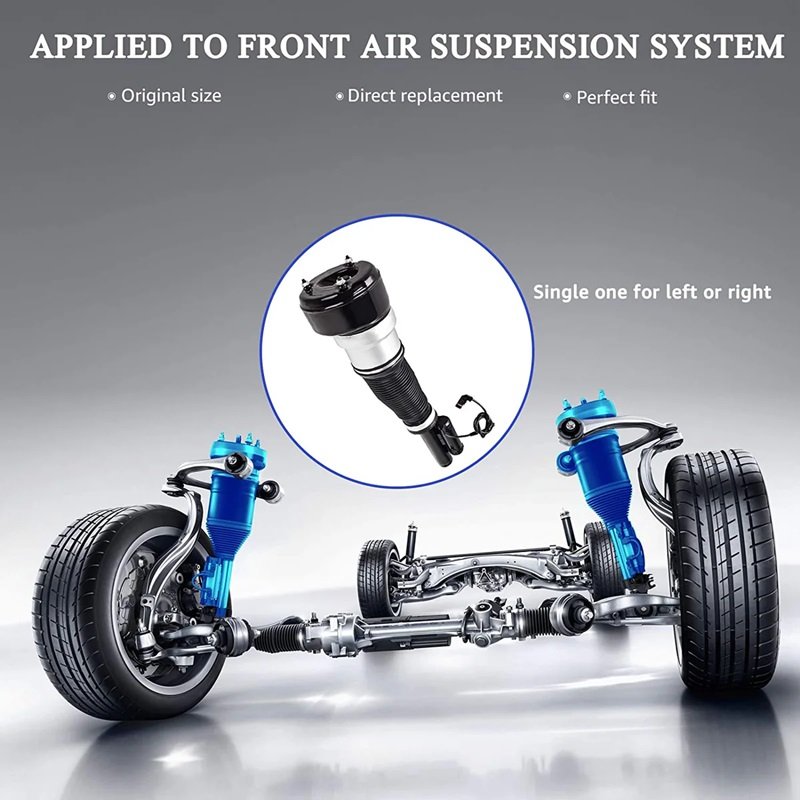
The Porsche Panamera’s PASM air suspension is a four-corner adaptive system that replaces conventional coil springs with pressurised air struts. Unlike simpler air suspension systems, PASM integrates continuously variable damping — the system adjusts both ride height and damper firmness in real time based on speed, cornering force, brake input, and driver-selected mode.
The core components:
- Air compressor — Draws in filtered air and compresses it to maintain system pressure. Located in the boot area, it runs whenever the system needs to adjust.
- Air struts (x4) — Each corner has an integrated air spring and adaptive damper. The rubber air bladder provides ride height adjustment; the electromagnetic damper valve controls firmness.
- Valve block — Distributes air to individual struts on demand. Solenoid valves for each corner allow independent height adjustment.
- Height sensors (x4) — Ultrasonic or hall-effect sensors at each corner feed ride height data to the PASM control unit.
- PASM control module — Processes all sensor data and manages compressor and valve block outputs in real time. Communicates with the vehicle’s main ECU for integrated chassis management.
- Air reservoir — A small pressure accumulator that stores compressed air to allow fast height adjustments without waiting for the compressor to build pressure from zero.
Our suspension specialists always complete a full PIWIS diagnostic scan and pressure hold test before recommending any Panamera PASM repair — identifying the specific failed component rather than replacing the entire system.
Why Dubai Conditions Accelerate PASM Failure
Business Bay Speed Bumps and Road Quality
Business Bay has a distinctive mix of high-speed access roads — Al Khail Road, Financial Centre Road approaches, the Bay Avenue system — and the aggressive speed bumps placed throughout the residential tower zones. The Panamera is frequently driven at moderate speed on the arterial roads, then decelerated for sharp speed bumps in the tower parking areas. Each speed bump event at even moderate speed creates a pressure spike in the air strut system and a mechanical impact load on the strut housings. Over years of Business Bay daily use, this cycle accelerates wear on strut top mounts and air bladder rubber.
Compressor Overwork in Stop-Start Traffic
Business Bay’s morning and evening traffic — the queue onto Al Khail Road, the congestion approaching the Financial Centre interchange — keeps the Panamera at low speeds for extended periods. The PASM system constantly readjusts as the car accelerates, brakes, and navigates around obstacles. This means the compressor runs more frequently than during sustained highway driving — and in Dubai’s heat, each run cycle generates more internal heat than in a cooler climate, accelerating compressor motor wear.
Heat Degradation of Rubber Air Bladders
The rubber air bladder inside each strut is the most heat-sensitive component in the PASM system. Sustained 45°C+ ambient temperatures, combined with the heat generated by the car’s own operation, subject the rubber to temperatures that cause micro-cracking and stiffening faster than in European conditions. A Business Bay Panamera parked outdoors — on the surface lots near the water canal — is subject to more severe heat cycling than one in a temperature-controlled basement.
The Typical Failure Sequence in Dubai
Panamera PASM failure in Dubai follows a consistent pattern that is worth understanding, because each stage has a different repair cost:
Stage 1: Compressor Degradation (AED 1,800–3,500)
The compressor motor brushes and impeller wear progressively. The compressor takes longer to achieve target pressure. The Panamera takes longer to rise to its selected ride height after a cold start — you notice it sitting lower for 30–60 seconds after starting. The PASM warning light may not yet be active. This is the cheapest intervention point.
Stage 2: Slow Air Leak Develops (AED 2,500–5,000)
A micro-crack in an air bladder, or a weeping air line fitting, causes one corner to slowly lose pressure overnight. The morning low-corner symptom becomes consistent — always the same corner, always noticeably lower after parking overnight. The PASM warning light activates. The compressor runs longer and more frequently to compensate.
Stage 3: Compressor Overload from Continuous Leak (AED 5,000–12,000)
If the leak is not addressed, the compressor runs near-continuously trying to maintain pressure against an ongoing loss. This kills the compressor quickly — sometimes within weeks. Now both the leaking strut and the burned-out compressor need replacing.
Stage 4: Multiple Strut Failure (AED 12,000–25,000+)
In advanced neglect cases — cars driven for extended periods with PASM warnings — multiple struts develop leaks. This requires multiple strut replacements simultaneously, significantly increasing the repair cost.
Warning Signs at Each Stage
| Warning Sign | Stage | Action |
|---|---|---|
| Slow rise after cold start (30–60 sec to full height) | Stage 1 — Compressor wear | Book inspection within 2 weeks |
| One corner consistently lower after overnight parking | Stage 2 — Slow leak | Book this week — leak will worsen |
| PASM warning light active, ride height abnormal | Stage 2–3 | Book immediately — compressor at risk |
| Compressor running loudly or continuously | Stage 3 — Compressor overloading | Urgent — compressor days from failure |
| Car sitting very low — multiple corners affected | Stage 3–4 | Do not drive — call for assessment |
| “Suspension: Please visit workshop” on instrument cluster | Any — system-level fault | Book immediately regardless of ride height |
Which Panamera Models and Years Are Most Affected
Panamera (970) — 2009 to 2016
The first-generation Panamera is the highest-risk group we see in Dubai from Business Bay and Downtown. These cars are now 8–15 years old. Air compressors on 2009–2013 models are well past their design life in Dubai conditions. Struts on early models have experienced 10+ years of heat cycling and should be treated as at-risk regardless of visible symptoms. If you own a 2009–2013 Panamera in Business Bay that has never had suspension work, call us to discuss preventive assessment.
Panamera (971) — 2016 to Present
The second-generation Panamera has a revised PASM system with improved compressor design and better air bladder materials. Failures are less common but do occur — particularly in high-mileage Dubai examples used as daily drivers. Compressor degradation on 971 models typically presents at 80,000–100,000 km in Dubai conditions versus 60,000–80,000 km on the 970.
Repair Costs in AED
| Repair | Prestige German Auto (AED) | Authorized Dealer (AED est.) | Notes |
|---|---|---|---|
| PIWIS diagnostic + pressure hold test | Free with repair | 500–800 | Identifies specific failed component |
| Air compressor replacement (OEM) | 1,800–3,000 | 3,500–5,500 | Most common first repair — act early |
| Single air strut replacement | 2,500–4,500 | 5,000–8,000 | OEM strut — matched pair recommended |
| Valve block replacement | 1,200–2,000 | 2,500–4,000 | Often misdiagnosed as strut failure |
| Height sensor replacement (x1) | 400–700 | 800–1,400 | Recalibration via PIWIS required after |
| Full system overhaul (all 4 struts + compressor) | 14,000–22,000 | 28,000–42,000 | Neglected or high-mileage systems |
All repairs carry our 3-month / 10,000 km written warranty. Fix Now, Pay Later available — book online. We also combine suspension work with brake service and oil service during the same visit when the Panamera is already on the lift.
Frequently Asked Questions
Why is my Porsche Panamera sitting low in the morning in Dubai?
A Panamera sitting lower than normal after overnight parking — particularly consistently on the same corner — almost always indicates a slow air leak in that corner’s strut or a failing air compressor that cannot maintain pressure overnight. In Business Bay, where Panameras park in both basement and outdoor surface parking, the heat cycling is significant. The compressor normally runs briefly on startup to restore height. If it takes more than 60 seconds or the car stays low after starting, book a suspension inspection immediately — Stage 2 leaks worsen progressively.
How much does Porsche Panamera air suspension repair cost in Dubai?
Air compressor replacement: AED 1,800–3,000 at a specialist versus AED 3,500–5,500 at an authorised dealer. Single strut replacement: AED 2,500–4,500 versus AED 5,000–8,000. Full system overhaul (all struts plus compressor): AED 14,000–22,000 versus AED 28,000–42,000. The most impactful financial decision a Panamera owner can make is acting at Stage 1 (compressor wear) rather than waiting until Stage 3 (compressor failure plus strut damage).
Can I drive my Porsche Panamera with the PASM warning light on in Dubai?
A yellow PASM warning with no visible ride height change: drive carefully to a workshop, avoiding speed bumps and limiting speed to 80 km/h. A car visibly lower on any corner, or a red PASM warning: do not drive. The Business Bay speed bumps are particularly dangerous for a Panamera with a collapsed strut — the strut housing can contact the wheel arch liner and in severe cases damage the tyre or wheel. Call us on +971 55 273 3911 for guidance on whether to drive in or arrange recovery.
How long does Porsche Panamera air suspension repair take in Dubai?
Compressor replacement: 3–4 hours. Single strut replacement: 3–5 hours. Valve block replacement: 2–3 hours. Full four-corner overhaul: 1.5–2 days. For Business Bay residents, we recommend booking early morning — most single-component repairs are completed same day. The car is height-calibrated via PIWIS after any strut or sensor replacement. Call ahead and we’ll confirm parts availability before you make the trip from Business Bay — approximately 15 minutes via Al Khail Road.
Is the Porsche Panamera air suspension worth repairing in Dubai, or should I convert to coil springs?
For a well-maintained Panamera in otherwise good condition, air suspension repair is almost always the right financial and driving-quality decision. The Panamera’s handling balance is calibrated around the PASM system — a spring conversion fundamentally changes the car’s dynamic character and removes the self-levelling capability. A spring conversion kit costs AED 3,000–5,000 but requires significant suspension geometry recalibration. We only recommend it for very high mileage Panameras where multiple suspension components have failed simultaneously and the car’s overall value doesn’t justify full system restoration.
Prevention Tips for Business Bay Panamera Owners
1. Slow Down for Business Bay Speed Bumps
The speed bumps in the tower residential zones of Business Bay are genuinely aggressive. Crossing them at even 15–20 km/h puts significant shock load into the air strut housings and top mounts. Use 5–8 km/h for sharp-profiled bumps — not just for comfort, but to measurably extend suspension component life.
2. Check Ride Height Visually Every Week
When you approach your Panamera in the Business Bay basement, take five seconds to look at all four corners. Equal height at all corners: normal. One corner visibly lower: book a suspension check that week. This takes ten seconds and catches Stage 2 leaks before they become Stage 3 failures.
3. Park in Temperature-Controlled Basement Where Possible
Business Bay has extensive basement parking in most towers. Using it consistently — rather than outdoor surface parking near the canal — reduces the heat cycling that degrades rubber air bladders. A Panamera that spends its nights at 25°C instead of 40°C has measurably longer strut life.
4. Don’t Ignore the Compressor Run Cycle
Listen to your compressor. On a healthy system, it runs for 3–8 seconds after cold start and then stops. If it’s running for 30+ seconds or seems to run periodically while parked, there is a leak somewhere. The compressor is trying to compensate. Address the leak before the compressor burns out from overwork.
5. Service the Air Filter on the Compressor
Like the Audi Q7’s air suspension, the Panamera’s compressor has a small intake filter. In Dubai’s dusty environment, this filter clogs faster than expected. A blocked filter makes the compressor work harder and run hotter — accelerating motor wear. Ask us to check it at every service. It’s a AED 100 part that protects a AED 3,000 compressor.
Conclusion
The Porsche Panamera’s PASM air suspension is a sophisticated system that Business Bay’s combination of heat, speed bumps, and stop-start traffic challenges harder than Porsche’s European test programme ever anticipated. The key principle is simple: act at the first warning sign. A Stage 1 compressor repair costs AED 1,800–3,000. Waiting until Stage 3 costs AED 8,000–15,000. The PASM warning light exists for exactly this reason — it is telling you something is wrong before the damage compounds.
At Prestige German Auto, we’ve been diagnosing and repairing Porsche PASM systems in Dubai since 2008. Our Al Quoz workshop uses PIWIS, carries OEM Porsche suspension parts, and backs every repair with our 3-month / 10,000 km written warranty. Call us on +971 55 273 3911 or WhatsApp — we’ll assess your Panamera’s suspension status and give you a clear repair quote before any work begins.
Book Your Porsche Panamera Suspension Diagnostic
PIWIS pressure test included | Same-day diagnosis | Fix Now, Pay Later
📞 Call: +971 55 273 3911
💬 WhatsApp: +971 55 273 3911
📧 Email: germanautouae@gmail.com
📍 Al Quoz Industrial Area 4, Dubai — Get Directions