Key Takeaways
- Porsche 911 PDK shudder in Dubai’s stop-go traffic is almost always caused by clutch pack wear or fluid degradation — not gearbox mechanical failure
- Downtown Dubai traffic — Financial Centre Road, Burj Khalifa Boulevard, Sheikh Mohammed Bin Rashid Boulevard — is among the harshest operating environments for the PDK’s wet clutch packs
- PDK fluid service every 40,000–50,000 km in Dubai (not the “lifetime fluid” claim) prevents the majority of shudder complaints
- A PDK fluid change costs AED 700–1,100 at a specialist — catching judder early prevents a AED 12,000–25,000 clutch pack rebuild
- Porsche’s PIWIS diagnostic system is essential for accurate PDK fault diagnosis — generic OBD scanners miss clutch adaptation data
Porsche 911 PDK Gearbox Shudder in Stop-Go Dubai Traffic — Root Causes Explained
Downtown Dubai is one of the most congested areas in the city — the approaches to Burj Khalifa Boulevard, the queue feeding into Financial Centre Road, the constant stop-start rhythm of Mohammed Bin Rashid Boulevard during evening rush hour. It is also, for a Porsche 911 PDK owner, one of the most mechanically demanding places to drive the car. The PDK — Porsche Doppelkupplung, or dual-clutch gearbox — was engineered for the kind of driving the 911 was designed to excel at: fast road, track days, committed acceleration. What it was not designed for is 45 minutes of stop-start urban crawl in 45°C ambient heat, which is precisely what Downtown Dubai delivers five days a week.
PDK shudder — that characteristic vibration and hesitation at low speed during take-up — is the natural consequence of this mismatch between design intent and Dubai reality. This guide explains exactly what causes it, how Dubai’s conditions accelerate it, and what it costs to fix before it becomes an expensive rebuild at a Porsche specialist workshop in Al Quoz.
In This Article
How the Porsche 911 PDK Works
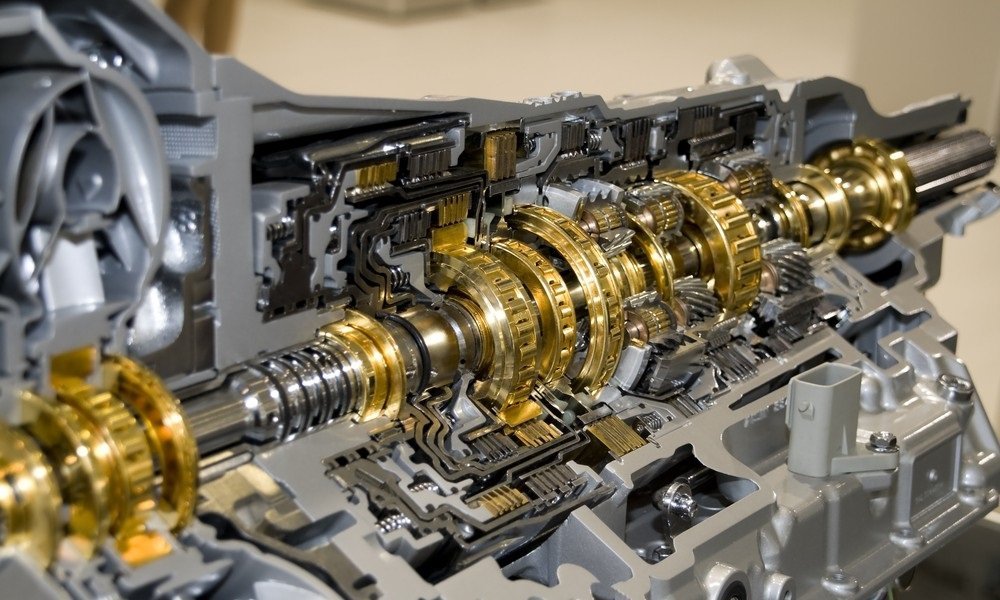
The PDK is a seven-speed dual-clutch transmission — essentially two manual gearboxes sharing the same housing, each controlled by its own clutch pack. Odd gears (1, 3, 5, 7) are handled by one clutch; even gears (2, 4, 6) by the other. While driving in first, second is pre-selected on the second clutch. A gear change is simply a matter of releasing one clutch and engaging the other — happening in milliseconds.
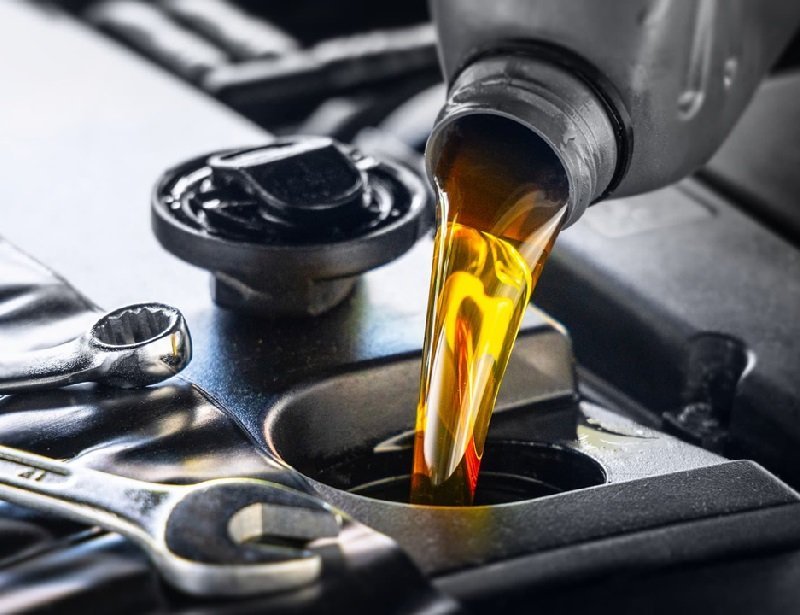
The 911 PDK uses wet clutch packs — multi-plate clutches running in an oil bath. This is fundamentally different from the dry clutch PDK/DSG systems on smaller Porsches and Volkswagens. Wet clutches handle higher torque loads and generate more heat — which the oil bath is designed to absorb. The Porsche PDK fluid (Porsche Transmission Fluid — PTF) serves triple duty: lubrication, cooling, and providing the hydraulic pressure that operates the electrohydraulic shift system.
The PDK’s central control unit continuously learns and adapts clutch engagement points through an adaptation algorithm. As the clutch packs wear, the adaptation adjusts to compensate — up to a point. When adaptation reaches its limits, the shudder appears. This is why PDK shudder is a gradual symptom that worsens over time rather than appearing suddenly. Our transmission specialists read these adaptation values directly during every PDK diagnostic.
Why Downtown Dubai Traffic Is Hard on the PDK
Repeated Low-Speed Clutch Engagement
Downtown Dubai’s traffic grid — Burj Khalifa Boulevard, Financial Centre Road, Al A’amal Street, the constant queue at the intersection approaching Dubai Mall — involves hundreds of low-speed clutch engagements per hour. Each engagement generates friction heat at the clutch face. In performance driving, the clutch engages fully and quickly — brief friction contact. In stop-start urban traffic, the clutch rides partially engaged for seconds at a time as the car crawls forward. This is far harsher on the clutch pack’s friction material than any track use.
45°C Ambient Heat Reduces Oil Cooling Capacity
The PTF absorbs heat from the clutch packs and dissipates it through the gearbox oil cooler. When ambient air temperature is 45°C — as it regularly is in Downtown Dubai’s concrete urban environment in summer — the cooler’s thermal delta is dramatically reduced. The oil temperature remains higher than in European driving, and the friction modifier additives in the PTF break down faster. Degraded PTF loses its ability to control clutch engagement smoothness.
Frequent Mode Transitions
Downtown driving requires constant transitions between crawl, gentle acceleration, braking, and stop. In PDK’s normal (not Sport or Sport+) mode, the gearbox selects first gear repeatedly in slow traffic. Each first-gear engagement at minimal throttle generates the highest clutch slip conditions of any operating mode — and in slow Downtown Dubai traffic, this happens continuously.
Root Causes of PDK Shudder in Dubai
1. PTF (Transmission Fluid) Degradation — Most Common Cause
Porsche originally classified PDK fluid as a lifetime fill. This claim has been widely revised — Porsche now recommends service intervals in its technical documentation, and Dubai specialists have been recommending 40,000–50,000 km intervals since the PDK’s introduction. Degraded PTF loses its friction modifier additives, which are responsible for controlling the feel of clutch engagement. Fresh PTF with full friction modifiers: smooth take-up. Degraded PTF without modifiers: shudder on engagement.
In many cases — particularly in early-stage shudder — a PTF service completely eliminates the symptom. This is the best-case scenario: AED 700–1,100 versus AED 12,000–25,000 for a clutch rebuild. The earlier you act, the higher the probability that fluid change alone resolves it.
2. Clutch Adaptation at Limit
The PDK’s control unit adapts clutch engagement points as the clutch packs wear. PIWIS diagnostic data shows the adaptation values for each clutch — when these reach their design limits, shudder is unavoidable regardless of fluid condition. At this stage, fluid change alone will not fix the shudder. Clutch pack replacement or a PDK rebuild is the correct path.
3. Mechatronic Unit Solenoid Wear
The PDK’s electrohydraulic control unit (mechatronic) contains solenoids that control clutch pressure and shift speed. Worn solenoids produce inconsistent clutch pressure — manifesting as jerky low-speed engagement that resembles shudder but has a different character: it’s more erratic, less rhythmic than friction-modifier-related shudder. PIWIS live data distinguishes between the two during diagnosis.
4. Torque Converter Shudder (Specific Variants)
Some 911 PDK variants include a torque converter for smooth low-speed take-up. Torque converter shudder has a characteristic that differs from clutch pack shudder: it typically occurs during light throttle at moderate speed (60–100 km/h) rather than at low-speed pullaway. Distinguishing the two is important for accurate repair recommendation.
Symptoms and What They Tell You
| Symptom | Most Likely Cause | Stage |
|---|---|---|
| Shudder at low speed in Downtown traffic, smooth at higher speed | PTF degradation or early clutch wear | Early — PTF service may fully resolve |
| Shudder worse when cold, improves after 10 min warm-up | PTF viscosity and friction modifier issue | Early to moderate — PTF service likely resolves |
| Shudder present warm and cold, no improvement | Clutch adaptation at limit or clutch wear | Moderate — adaptation reset + PTF needed; may need clutch |
| Jerky, unpredictable engagement at all speeds | Mechatronic solenoid issue | Moderate to severe — mechatronic diagnosis required |
| Shudder at 60–100 km/h under light throttle | Torque converter shudder | Specific fault — torque converter service needed |
| PDK warning light on dashboard | Control unit fault or severe mechanical issue | Urgent — do not continue performance driving |
Diagnosis: Why PIWIS Matters
The Porsche 911 PDK cannot be accurately diagnosed with a generic OBD scanner. The PDK’s control module stores data that is only accessible through Porsche’s proprietary PIWIS (Porsche Integrated Workshop Information System) diagnostic platform — including:
- Clutch K1 and K2 adaptation values — Shows how far each clutch pack has worn and how much adaptation headroom remains
- PTF temperature and peak temperature log — Reveals if the gearbox has been overheated, which accelerates fluid and clutch degradation
- Solenoid current draw values — Identifies mechatronic solenoid wear before mechanical failure
- Shift quality parameters — Quantifies the shudder objectively rather than relying only on the driver’s subjective description
At Prestige German Auto, we use PIWIS for all Porsche diagnostics. This gives us the same data access as a Porsche authorised dealer — but at independent workshop pricing. Every PDK diagnostic begins with a full PIWIS scan before any repair recommendation is made.
Repair Costs in AED
| Service | Prestige German Auto (AED) | Authorized Dealer (AED est.) | Notes |
|---|---|---|---|
| PIWIS diagnostic + adaptation data review | Free with repair | 500–800 | Essential first step — defines the repair path |
| PDK fluid (PTF) change + adaptation reset | 700–1,100 | 1,400–2,200 | Resolves shudder when caught early |
| Mechatronic unit repair | 3,500–6,000 | 7,000–12,000 | Solenoid rebuild — less than full unit replacement |
| Mechatronic unit replacement | 6,000–10,000 | 12,000–20,000 | For units beyond solenoid-level repair |
| PDK clutch pack replacement (K1 or K2) | 8,000–14,000 | 18,000–28,000 | Definitive fix for worn clutches |
| Full PDK rebuild | 18,000–28,000 | 35,000–55,000 | For gearboxes with multiple failed components |
All work carries our 3-month / 10,000 km written warranty. Fix Now, Pay Later available — ask when you book your service. We recommend combining PDK service with an engine oil service during the same visit.
Frequently Asked Questions
Why does my Porsche 911 PDK shudder in Downtown Dubai traffic?
Downtown Dubai’s stop-start traffic — Financial Centre Road, Burj Khalifa Boulevard, Dubai Mall approaches — is one of the harshest environments for the PDK’s wet clutch packs. Hundreds of low-speed clutch engagements per hour in 45°C ambient heat degrade PTF friction modifiers and wear clutch friction material faster than any track or motorway use. In most cases, early-stage shudder is caused by degraded PTF and is resolved with a fluid service at AED 700–1,100.
How much does Porsche 911 PDK gearbox service cost in Dubai?
A PDK fluid (PTF) change and adaptation reset costs AED 700–1,100 at a specialist workshop — compared to AED 1,400–2,200 at an authorised Porsche dealer. This is the correct first step for any PDK shudder complaint. If the adaptation values are at their limits and clutch replacement is needed, costs range from AED 8,000–14,000 per clutch pack, versus AED 18,000–28,000 at the dealer.
Can a PDK fluid change fix Porsche 911 shudder in Dubai?
Yes — when the shudder is caught early, before the clutch packs have worn beyond the adaptation range. Early-stage shudder that is worse when cold and improves with warm-up, or shudder that has appeared recently, has a high probability of being resolved by a PTF change. Moderate-to-severe shudder with PIWIS adaptation values at their limits requires clutch work regardless of fluid condition. The earlier the fluid is changed, the higher the chance of avoiding a major rebuild.
How often should I service the Porsche 911 PDK gearbox in Dubai?
Every 40,000–50,000 km for Dubai driving conditions — not the “lifetime fill” specification that Porsche originally quoted for moderate climates. Downtown Dubai driving with its heat and stop-start demands degrades PTF significantly faster than European motorway use. Many Dubai 911 owners who come to us with shudder complaints have never changed their PDK fluid — on cars with 80,000–120,000 km on the clock.
Does Prestige German Auto use PIWIS for Porsche 911 PDK diagnostics in Dubai?
Yes. PIWIS is the only way to accurately read PDK adaptation values, solenoid condition data, and thermal history from the PDK’s control module. Generic scanners cannot access this data. Our Al Quoz workshop uses PIWIS for all Porsche diagnostics — giving you dealer-level data access at independent workshop pricing. Call +971 55 273 3911 to book a PDK diagnostic.
Tips for Downtown Dubai 911 PDK Owners
1. Use Sport or Sport+ Mode in Stop-Start Traffic
Counterintuitively, using Sport or Sport+ mode in very slow Downtown Dubai traffic can reduce clutch pack stress. These modes manage the clutch engagement differently at low speed — holding gear longer and engaging more decisively rather than the hunting behaviour of normal mode. Many 911 PDK owners in Dubai report noticeably less shudder in Sport mode during city traffic.
2. Service PTF Every 40,000 km — No Exceptions
Mark the PTF service in your calendar. AED 700–1,100 every 40,000 km is the single most cost-effective PDK maintenance habit. The alternative is a AED 12,000+ clutch job when the fluid runs to failure.
3. Avoid Riding the Throttle in Slow Traffic
In very slow traffic, the instinct is to maintain a tiny amount of throttle to creep forward. This keeps the clutch partially engaged — the worst possible position for clutch friction material. Instead, allow the car to stop fully, then apply enough throttle for a decisive (if slow) engagement. Complete engagement is far gentler on the clutch face than prolonged partial engagement.
4. Don’t Ignore Early Shudder
Early PDK shudder is a symptom, not a problem. It is telling you the fluid needs changing. Ignoring it for another 20,000 km risks progressing from a AED 1,000 fluid service to a AED 12,000 clutch job. Contact our transmission team at the first sign.
5. Keep the Engine Oil Fresh
Engine oil quality affects the temperature environment of the entire drivetrain. A fresh oil service at 7,500 km keeps the engine — and therefore the gearbox — running at lower operating temperatures, extending clutch and fluid life in Dubai’s demanding conditions.
Conclusion
The Porsche 911 PDK is a remarkable piece of engineering that Dubai’s urban traffic simply was not factored into its design brief. For Downtown Dubai owners who spend their mornings on Financial Centre Road and their evenings queuing past Burj Khalifa, the PDK’s clutch packs and transmission fluid are working far harder than the car was designed to expect. The answer is not to avoid the car — it’s to maintain it on a schedule that reflects Dubai reality rather than European optimism. PTF service every 40,000 km. PIWIS diagnostic at the first sign of shudder. Early action, every time.
At Prestige German Auto, we’ve been servicing Porsche gearboxes in Dubai since 2008. Our Al Quoz workshop uses PIWIS and carries Porsche-specification PTF. Call us on +971 55 273 3911 or WhatsApp — we’ll tell you whether your PDK needs a fluid service or something more, before you spend a dirham.
Book Your Porsche 911 PDK Service Today
PIWIS diagnostic included | PTF service from AED 700 | Fix Now, Pay Later
📞 Call: +971 55 273 3911
💬 WhatsApp: +971 55 273 3911
📧 Email: germanautouae@gmail.com
📍 Al Quoz Industrial Area 4, Dubai — Get Directions