Key Takeaways
- The Audi Q7 air suspension compressor is the most common failure point — not the air struts themselves
- Dubai’s heat and stop-start traffic accelerate compressor wear significantly versus cooler climates
- Repair cost in Dubai ranges from AED 1,800 to AED 4,500 depending on whether you replace the compressor or the full strut
- Warning signs appear weeks before full failure — catching them early saves thousands of dirhams
- Independent Audi specialists in Al Quoz deliver the same repair quality as dealers at 30–50% lower cost
Audi Q7 Air Suspension Compressor Failure: Dubai Repair Cost and Timeline
You’re pulling out of Dubai Mall’s underground parking on a Friday evening, Q7 loaded with shopping and the family in the back, when you notice something feels wrong. The ride is harder than usual. By the time you reach Sheikh Zayed Road, the car is sitting noticeably lower on the rear right corner. Your dashboard flashes a suspension warning. In Dubai’s heat, with the kind of stop-start traffic that plagues the city, this is not a rare story — it’s one we hear at our Audi specialist workshop in Al Quoz almost every week.
The Audi Q7 Airmatic suspension system is one of the most sophisticated — and most failure-prone — air suspension setups in the luxury SUV segment. When it works, it’s exceptional. When it fails, it fails in ways that can leave you stranded or facing a bill that feels like a second mortgage. This guide covers exactly what goes wrong, why Dubai’s environment makes it worse, what it costs to fix in AED, and how to know when you’re being overcharged.
In This Article
- How the Audi Q7 Air Suspension System Works
- Why Dubai Destroys Air Suspension Faster
- Symptoms of a Failing Air Suspension Compressor
- Diagnostic Steps and What the Codes Mean
- Repair Costs in Dubai (AED)
- Which Q7 Model Years Are Most Affected
- Frequently Asked Questions
- Tips for Dubai Q7 Owners
- Conclusion and Next Steps
How the Audi Q7 Air Suspension System Works
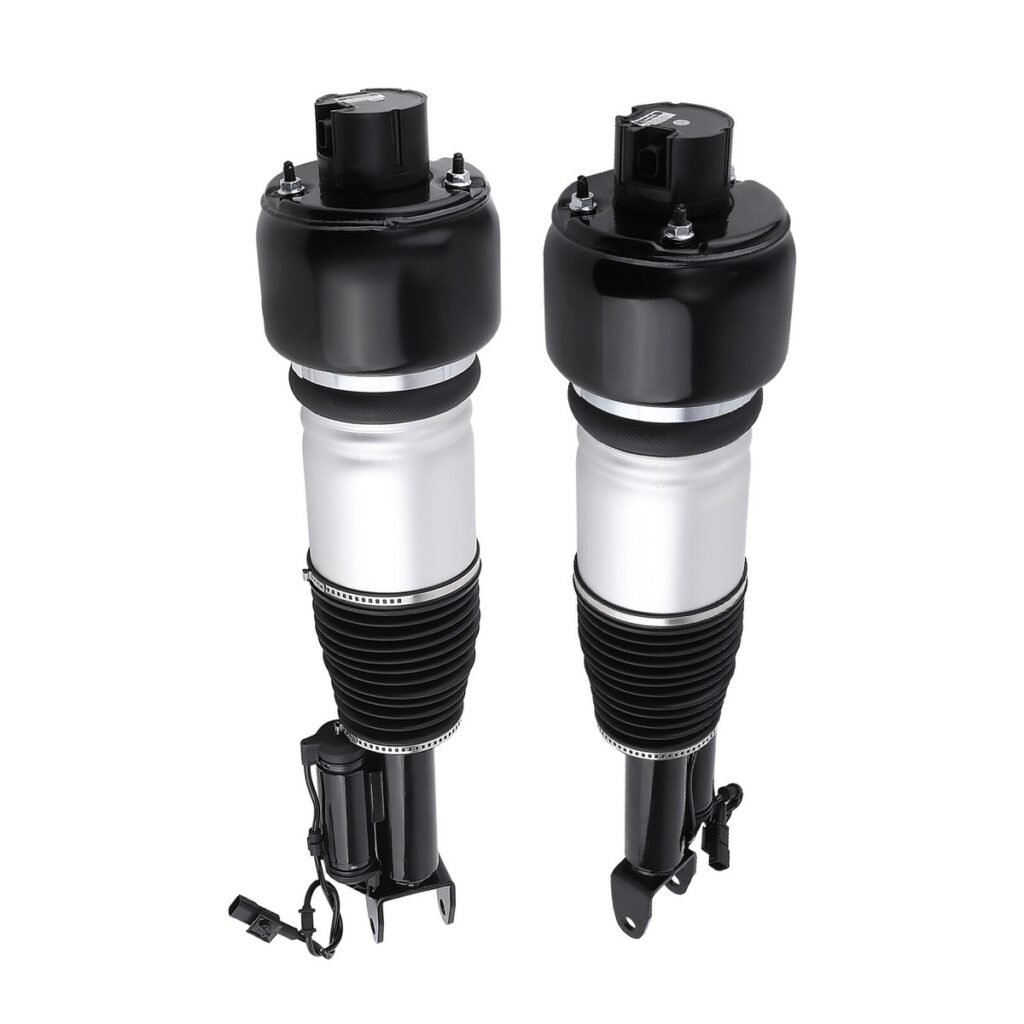
The Audi Q7’s air suspension — known within Audi’s engineering documentation as the Adaptive Air Suspension system — replaces conventional coil springs with pressurised air struts at each corner. A central compressor draws in air, compresses it, and feeds it to each strut on demand. An ECU constantly adjusts ride height based on speed, load, and driver-selected mode.
The system has several key components, each with its own failure profile:
- Air compressor — The most common failure point. Located in the rear left of the boot, it runs every time the system needs to adjust pressure.
- Air struts (x4) — Rubber air bladders inside each strut. They degrade over time, especially in extreme heat.
- Air lines and fittings — Nylon tubing running from the compressor to each strut. Can crack or develop leaks at joints.
- Valve block — Distributes air to each individual strut. Solenoid failures here cause single-corner sagging.
- Height sensors (x4) — Ride height sensors at each corner feed data to the ECU. A faulty sensor can trigger false warnings without any actual mechanical fault.
Understanding which component has actually failed matters enormously — because replacing the wrong part is one of the most expensive mistakes in Q7 ownership. Our suspension specialists always complete a full diagnostic scan before touching a single bolt.
Why Dubai Destroys Air Suspension Faster
Every car in Dubai faces conditions it was not originally engineered for. Audi designs and tests the Q7’s air suspension in German weather — ambient temperatures rarely above 35°C, relatively low humidity, and roads built to exacting tolerances. Dubai is the opposite on every count.
Extreme Heat Accelerates Rubber Degradation
The rubber air bladders inside each strut are rated for a wide temperature range, but sustained exposure to temperatures above 45°C — which the engine bay and under-chassis areas reach routinely during a Dubai summer — accelerates micro-cracking. What might last 150,000 km in a temperate climate can start leaking at 80,000–90,000 km here.
Stop-Start Traffic Overworks the Compressor
In normal highway driving, the compressor runs briefly to maintain pressure. In Dubai’s notorious stop-start traffic — Sheikh Zayed Road during rush hour, the approaches to Mall of the Emirates, Business Bay during office hours — the system constantly re-adjusts ride height as the car accelerates and brakes. This means the compressor runs far more frequently than its duty cycle was designed for, generating excessive heat and wearing out the motor brushes prematurely.
Speed Bump Punishment
Dubai has some of the most aggressive speed bumps in the world — particularly in residential areas like Al Quoz, Jumeirah Village Circle, and Mirdif. Every time the Q7 takes a sharp speed bump at even moderate speed, the system spikes pressure to compensate. This is hard on the valve block solenoids and air line fittings.
Dusty Air Degrades the Compressor Filter
The compressor draws air from inside the boot area, filtered through a small foam filter. Dubai’s dusty air — especially during Shamal wind events — clogs this filter faster than expected. A blocked filter forces the compressor motor to work harder to achieve the same pressure, burning it out years ahead of schedule. This is a AED 20 fix that most owners never know about until the AED 3,000 compressor is dead.
Symptoms of a Failing Air Suspension Compressor
The Q7’s system will give you warning before it completely fails — if you know what to look for. Here are the stages in order of severity:
Stage 1 — Early Warning (Easy to Miss)
- Ride feels slightly firmer than normal, especially over speed bumps
- Car takes longer than usual to raise itself after sitting overnight
- A faint whirring or cycling sound from the boot area for longer than normal after starting
- Occasional “Suspension: Please visit workshop” message that clears itself
Stage 2 — Moderate Failure (Act Now)
- One corner sitting lower than the others — most commonly rear right or rear left
- Persistent warning on the instrument cluster
- System unable to reach selected ride height — “sport” mode won’t lower the car
- Audible compressor running continuously without achieving pressure
Stage 3 — Full Failure (Urgent)
- Car sitting fully collapsed on one or more corners
- Warning to drive at reduced speed and visit workshop immediately
- System locked in default “emergency” ride height
- Steering and handling feel vague due to geometry change
If your Q7 reaches Stage 3, do not drive it. Call us on +971 55 273 3911 or book a recovery directly. Driving a fully collapsed air strut can damage the strut housing, wheel arch liner, and in extreme cases the wheel itself.
Diagnostic Steps and What the Codes Mean
When your Q7 comes into our Al Quoz workshop, the first step is always a full VCDS or ODIS diagnostic scan. The suspension control module stores fault codes that tell us exactly what has failed. Here are the most common codes and what they actually mean:
| Fault Code | Description | Most Likely Cause |
|---|---|---|
| 01314 | Engine Control Module — No Communication | Often a secondary code — check suspension module first |
| 01591 | Compressor for Ride Level Control — Mechanical Malfunction | Compressor motor failure — replacement required |
| 01603 | Supply Voltage B+ — Voltage too Low | Weak battery struggling to power compressor — check battery first |
| 01594 | Ride Level Control Sensor — Front Left (or Right) | Height sensor failure — often a cheap fix |
| 01590 | Air Supply System — Leakage | Air line crack, strut leak, or valve block leak |
A proper diagnostic also includes a manual leak-down test — pressurising each strut and checking for pressure loss over 30 minutes. This identifies slow leaks that don’t trigger fault codes but progressively worsen over weeks. Our Audi technicians perform this as standard before quoting any suspension repair.
Repair Costs in Dubai (AED)
Here is an honest breakdown of what suspension repairs cost in Dubai. These are real-world figures from our workshop — not dealer estimates, not guesses.
| Repair | Prestige German Auto (AED) | Authorized Dealer (AED est.) | Notes |
|---|---|---|---|
| Diagnostic scan | Free with repair | 300–500 | We include this in the repair quote |
| Compressor filter replacement | 80–150 | 200–350 | Should be done preventively every 40,000 km |
| Air compressor replacement (OEM) | 1,800–2,400 | 3,200–4,500 | OEM Wabco unit, same as dealer supply |
| Single air strut replacement | 1,200–1,800 | 2,500–3,800 | OEM Contitech or equivalent |
| Valve block replacement | 600–900 | 1,200–1,800 | Often confused with strut failure |
| Height sensor replacement (x1) | 250–400 | 500–800 | Recalibration required after replacement |
| Full system overhaul (all 4 struts + compressor) | 6,500–9,000 | 13,000–18,000 | Rare — usually only if car has been neglected for years |
All repairs at Prestige German Auto come with our 3-month / 10,000 km written warranty. We also offer Fix Now, Pay Later installment options — ask us when you book. You can also request a free estimate online before bringing the car in.
Need other work done at the same time? We handle brake servicing, oil changes, and AC repairs — booking them together saves you time and a second workshop visit.
Which Audi Q7 Model Years Are Most Affected
The Q7 has been sold in two main generations, and air suspension failure patterns differ between them.
First Generation Q7 (4L — 2006 to 2015)
The Mk1 Q7 uses the earlier Wabco air suspension system. Compressors on these vehicles — particularly 2006–2010 models — are now at or past their design life. If you own a first-gen Q7 in Dubai with over 100,000 km on the clock and have never replaced the compressor, it is not a question of if it will fail — it’s a question of when. The air struts on these models are also prone to splitting at the top mount, a Dubai heat-specific issue.
Second Generation Q7 (4M — 2016 to Present)
The Mk2 Q7 uses a revised air suspension system that is generally more reliable. However, the 2016–2018 build years had known issues with the compressor relay burning out. If your Mk2 Q7 shows fault code 01603 (voltage too low at compressor), check the relay before authorising a full compressor replacement — it’s a AED 150 part that mimics a AED 2,400 compressor failure.
The 3.0 TFSI V6 petrol models across both generations see slightly higher compressor wear than the diesels, likely due to more frequent engine-off/on cycles from the petrol stop-start system combined with the suspension’s own adjustments. Our transmission and drivetrain team often sees these come in together with gearbox service on higher-mileage petrol Q7s.
Frequently Asked Questions
How much does it cost to fix Audi Q7 air suspension in Dubai?
In Dubai, an Audi Q7 air suspension compressor replacement costs between AED 1,800 and AED 2,400 at a reputable independent specialist — compared to AED 3,200–4,500 at an authorised dealer. A single air strut replacement runs AED 1,200–1,800. The total cost depends on what has actually failed, which is why a proper diagnostic scan is essential before any work begins. At Prestige German Auto in Al Quoz, the diagnostic is included in the repair cost.
Why is my Audi Q7 sitting low on one side in Dubai?
A Q7 sitting low on one side almost always indicates either a leaking air strut on that corner or a failed solenoid in the valve block that prevents that corner from receiving air pressure. In Dubai’s heat, rubber air bladders degrade faster than in cooler climates, causing slow leaks that worsen over time. This is not a problem you can ignore — driving with mismatched ride height places uneven stress on the wheel bearings, tyres, and steering components.
Can I drive my Audi Q7 with the suspension warning light on in Dubai?
It depends on which warning is showing. A yellow suspension warning with no immediate ride height change means you can drive carefully to a workshop — do not exceed 80 km/h and avoid speed bumps where possible. A red warning, or a car visibly sagging on any corner, means stop driving immediately. Continuing to drive with a collapsed strut risks wheel arch damage, tyre blowout from abnormal contact angles, and potentially losing vehicle control. Call us on +971 55 273 3911 for guidance specific to your situation.
Is it worth fixing the air suspension on an older Audi Q7, or should I convert to coil springs?
This is one of the most common questions we get in Dubai about first-generation Q7s. The honest answer: if your Q7 is otherwise in good condition with a healthy engine and gearbox, repairing the air suspension properly is almost always the better financial decision. A quality compressor repair costs AED 1,800–2,400. A spring conversion kit costs AED 1,500–2,500 plus labour — and permanently removes the self-levelling capability that makes the Q7 handle correctly with a full load. We only recommend spring conversion if the car has very high mileage and multiple suspension components have failed simultaneously.
How long does Audi Q7 air suspension repair take at a workshop near Al Quoz?
At our Al Quoz workshop, a compressor replacement on the Q7 typically takes 3–4 hours. A single air strut replacement takes 2–3 hours. A full system leak-down test and diagnostic takes 1.5 hours. In most cases, if the car arrives in the morning, it is ready the same afternoon. We offer same-day service on all suspension repairs where parts are in stock. For specific model year parts that need to be ordered, we can usually source within 24–48 hours through our parts network.
What happens if I ignore the Audi Q7 air suspension fault and keep driving?
A slow compressor failure that is ignored typically progresses through three stages over 2–6 weeks: first, longer compressor run times; then, inability to hold ride height; finally, complete collapse. At the final stage, what might have been a AED 2,000 compressor job becomes a AED 2,000 compressor job plus AED 1,500 in strut damage from the car operating without proper air pressure. We see this regularly from owners who noticed the warning but waited. Early repair always costs less.
Tips for Dubai Audi Q7 Owners
1. Replace the Compressor Filter Every 40,000 km
The small foam filter in the boot that feeds clean air to the compressor costs AED 80–150 to replace. In Dubai’s dusty environment, it should be replaced every 40,000 km as routine maintenance — not waited on until the compressor burns out. Ask us to check it during your next oil service.
2. Park in Shade Whenever Possible
Extreme heat is the primary accelerator of rubber air bladder degradation. Parking in covered parking — Dubai Mall, Ibn Battuta, office basement car parks — rather than open-air surface lots significantly extends the life of your air struts. The difference between a car parked indoors consistently versus outdoors in Dubai summer can be 30,000–40,000 km of additional strut life.
3. Check Ride Height Visually Each Morning
Once a week — when you walk to your car in the morning — take 10 seconds to look at the ride height from the front and back. If one corner looks even slightly lower than the others, have it checked before the problem worsens. This takes less than a minute and can catch a slow leak before it becomes a full failure.
4. Do Not Ignore the First Warning
The Q7’s suspension system is conservative with its warnings — it doesn’t flash alerts for trivial reasons. The first time you see a suspension message, book a diagnostic within the week. Do not wait until the next service interval. Our Audi team can run a full scan in under two hours and give you a clear picture of what, if anything, needs attention.
5. Ensure Your Battery Is in Good Health
The air suspension compressor draws significant current — a weak battery struggling to start the engine will also struggle to power the compressor adequately. A low-voltage compressor motor overheats faster and wears out prematurely. Have your battery tested when it reaches 3–4 years old, which in Dubai’s heat is earlier than manufacturers typically recommend.
Conclusion
The Audi Q7’s air suspension is a genuinely impressive engineering system — but in Dubai’s heat and traffic conditions, it requires more attention than the owner’s handbook suggests. The good news is that most failures follow a clear progression with plenty of warning time. Catch the compressor fault early, replace the filter preventively, keep the battery healthy, and park in shade — and you can easily add years to the life of your suspension system.
When repairs are needed, an experienced Audi specialist in Al Quoz will diagnose accurately and repair correctly — without the dealer markup. At Prestige German Auto, we’ve been keeping German cars running in Dubai since 2008, with a 4.9-star rating and a written 3-month / 10,000 km warranty on every repair. Call us on +971 55 273 3911 or WhatsApp for a free assessment — we’ll tell you exactly what’s wrong and what it will cost before we touch the car.
Book Your Audi Q7 Suspension Diagnostic Today
Free diagnostic included with every repair | Same-day service | Fix Now, Pay Later available
📞 Call: +971 55 273 3911
💬 WhatsApp: +971 55 273 3911
📧 Email: germanautouae@gmail.com
📍 Al Quoz Industrial Area 4, Dubai — Get Directions