BMW 3 Series Oil Consumption Problem: Dubai Heat Makes It Worse
A Jumeirah Lake Towers resident brings their BMW 335i in for an oil change and mentions, almost apologetically, that they have been topping up the oil every 3,000–4,000 km. “Is that normal for a BMW?” The honest answer: it is common on the N55-engined 3 Series, but it is not something to accept without investigation. BMW 3 Series oil consumption in Dubai is a specific, well-documented issue — and Dubai’s combination of high ambient temperatures, motorway driving at sustained speeds, and extended oil service intervals creates a set of conditions that make oil consumption worse than BMW’s own customer-facing guidance suggests. This guide explains the root causes, what the correct diagnosis looks like, what it costs to fix — and what happens if you do not.
Key Takeaways
- BMW considers up to 1 litre per 1,000 km acceptable — in Dubai’s climate, this is the upper boundary, not a target to aspire to
- The N55 engine (F30 335i, F10 535i, F25 X3 35i) has two primary oil consumption causes: PCV (Positive Crankcase Ventilation) failure and piston ring wear
- Dubai’s heat accelerates PCV valve diaphragm degradation — this is the first and least expensive cause to rule out
- Continued driving with high oil consumption without diagnosis risks a low-oil catastrophic failure — particularly dangerous in Dubai summer motorway driving
- Prestige German Auto has been diagnosing and repairing N55 oil consumption on Dubai-registered BMWs since 2008 with a 4.9-star Google rating
Table of Contents
- The BMW N55 Engine and Oil Consumption Background
- Why Dubai Makes N55 Oil Consumption Worse
- 4 Root Causes of N55 Oil Consumption
- How to Recognise Excessive Oil Consumption
- Diagnostic Process — Getting the Right Answer First Time
- Repair Costs in AED
- Frequently Asked Questions
- Oil Management Tips for Dubai N55 Owners
The BMW N55 Engine and the Oil Consumption Issue
The N55 is BMW’s 3.0-litre inline-six turbocharged petrol engine, introduced in 2009 as the successor to the twin-turbocharged N54. It was used across a wide range of models: the F30 335i and 340i, F10 535i, F25/F26 X3/X4 35i, F15/F16 X5/X6 35i, and various M Performance variants. It is a responsive, refined engine that most owners — reasonably — assume will not consume oil at a meaningful rate.
BMW’s own technical guidance states that up to 1 litre of oil consumption per 1,000 km is considered “within specification” for turbocharged petrol engines. For a driver covering 2,500 km per month in Dubai — a modest amount — this means potentially adding 2.5 litres between services, which are typically every 10,000–15,000 km. Many owners are unaware of this tolerance, and many more are unaware that Dubai’s specific conditions push actual consumption toward the upper end of this range on engines with any degree of wear.
Two distinct mechanical causes account for the majority of N55 oil consumption: PCV (Positive Crankcase Ventilation) system failure, and piston ring wear. Each requires a completely different repair and has a significantly different cost. Correct diagnosis before any parts are ordered is essential.
Why Dubai’s Climate Makes N55 Oil Consumption Worse
Heat Degradation of the PCV System
The N55’s PCV system uses a rubber diaphragm valve (often called the crankcase breather valve or oil separator) to manage crankcase pressure. Crankcase pressure — generated by combustion blow-by gases past the piston rings — must be vented and the oil mist in those gases recaptured before being returned to the intake. The diaphragm valve controls this process. In Dubai’s engine bay temperatures — which can reach 120–130°C near the valve cover — rubber diaphragm material degrades measurably faster than in European conditions. A degraded diaphragm allows excess crankcase pressure to build, which then forces oil past the piston rings and valve stem seals into the combustion chamber, where it burns. This is oil consumption caused not by worn engine internals, but by a failed ventilation component — a crucial distinction because the repair cost is AED 400–800 versus AED 8,000–18,000 for a piston ring replacement.
Extended Service Intervals in High-Heat Operation
BMW’s Condition Based Service (CBS) system can suggest oil change intervals of 20,000–25,000 km on the N55 in some driving profiles. In Dubai’s summer heat — with oil temperatures consistently higher than the European baseline the CBS algorithm was calibrated for — oil oxidises and loses viscosity faster. As oil breaks down, it provides less lubrication to piston ring groove surfaces and less film strength on cylinder walls. This accelerates the ring groove carbon build-up that contributes to the second major cause of N55 oil consumption: stuck or worn piston rings. Shorter oil change intervals directly reduce this accelerating factor.
Sustained High-Speed Motorway Operation
Dubai’s motorway network — E311, SZR, E11 — encourages sustained high-speed cruising at 120–140 km/h, often in ambient heat of 44–48°C. At these speeds and temperatures, engine oil consumption through valve stem seals and piston rings is at its highest rate. An N55 that covers 60% of its mileage on Dubai motorways will typically show higher total oil consumption than an equivalent European car covering the same mileage predominantly in urban driving at lower engine speeds.
4 Root Causes of N55 Oil Consumption in Dubai
1. PCV Crankcase Ventilation Valve Failure (Most Common First Step)
The PCV valve on the N55 sits within the valve cover and contains a rubber diaphragm that opens and closes to control crankcase pressure. When the diaphragm tears or stiffens, the valve either stays open (allowing constant vacuum to draw oil from the crankcase into the intake) or stays closed (allowing pressure to build and force oil past rings and seals). The failure is diagnosed by: checking for a whistling or hissing noise from the engine bay at idle; a vacuum test on the oil fill tube; and inspection of the intake boot for oil residue (indicating oil is being pulled into the intake). PCV replacement is the first, least expensive investigation that should always be completed before any internal engine work is considered.
2. Valve Stem Seal Wear
Each intake and exhaust valve passes through a valve guide sealed by a rubber valve stem seal. These seals prevent oil from the camshaft/rocker area from entering the combustion chamber via the valve guide. In Dubai, heat cycling causes the rubber compound in these seals to harden and develop micro-cracks at 80,000–120,000 km — earlier than European vehicles. Worn valve stem seals are identifiable by: a puff of blue smoke from the exhaust on start-up (oil has pooled on the valves overnight) that clears within 30 seconds, plus oil consumption without blue smoke during normal driving. Valve stem seal replacement on the N55 requires removal of the cylinder head — it is a significant job, but considerably less than piston ring replacement.
3. Piston Ring Wear and Carbon Fouling
The piston rings seal the combustion chamber from the crankcase. On the N55, two failure modes cause ring-related oil consumption: physical ring wear from high mileage and degraded oil, and carbon build-up in the ring grooves causing rings to stick in position (known as “ring sticking” or “ring jacking”). A stuck ring cannot seat properly against the cylinder wall and allows oil to pass into the combustion chamber. Ring sticking on the N55 is more common in Dubai because of extended oil change intervals combined with higher operating temperatures that accelerate carbon formation in ring grooves. Diagnosis requires a cylinder leakage (compression leakdown) test on each cylinder to measure the degree of ring seal loss.
4. Turbocharger Oil Seal Wear
The N55’s single twin-scroll turbocharger uses engine oil for bearing lubrication. The oil enters through a feed line and returns via a drain line to the sump. The turbo shaft seals — which prevent oil from entering the compressor or turbine housings — can wear or degrade, particularly at higher mileages. Oil entering the compressor side is drawn into the intake and burned; oil entering the turbine side exits via the exhaust as blue smoke under boost. A key diagnostic distinction from piston ring or valve seal oil consumption: turbo oil consumption is most visible as blue smoke under hard acceleration or immediately after a boost event, rather than at cold start or sustained cruising. Turbo replacement is required when shaft seal wear is confirmed — the turbo is not a serviceable item internally.
How to Recognise Excessive Oil Consumption on Your N55
- Oil level dropping noticeably between services — Check your level on the iDrive oil condition display every 2,000–3,000 km. Any consistent drop of more than 0.5 litres per 2,000 km warrants investigation.
- Blue-grey smoke from the exhaust on cold start — Clears within 30 seconds; likely valve stem seals. Persists for longer; possibly more significant.
- Blue smoke under acceleration or when boosting — Turbocharger oil seal, not engine internals. Different repair, different cost.
- Oil residue in the intake boot or air filter housing — PCV failure allowing oil mist to recirculate into the intake. Very identifiable and relatively inexpensive to resolve.
- Oily spark plugs — Oil in the combustion chamber from any source will foul spark plugs, particularly the plug nearest the valve with the worst seal. Blue or black fouling on plugs 1–6 can indicate which cylinders are affected.
- Low oil warning light — If you have reached this stage without investigation, the N55 has been running with insufficient oil. In Dubai’s summer heat, this is a serious risk to bearing life. Top up immediately and book an urgent engine diagnosis.
BMW N55 Oil Consumption Diagnostic Process
At Prestige German Auto, we follow a structured diagnostic ladder for N55 oil consumption — moving from least to most invasive and from cheapest to most expensive potential cause:
- Oil consumption measurement — We establish the actual consumption rate precisely: fresh oil fill to the maximum mark, sealed cap, driven 1,500–2,000 km, measured again. This gives an objective AED-per-1,000 km consumption rate to guide urgency.
- PCV system inspection — Visual inspection of the intake tract for oil residue, vacuum test on the oil filler neck, inspection of the PCV diaphragm. If the PCV is failed, we replace it before any further investigation.
- Retest after PCV replacement — If oil consumption is significantly reduced, the diagnosis is confirmed. If consumption continues at the same rate, we proceed.
- Cylinder leakdown test — Each cylinder is pressurised to measure ring seal quality. Cylinders losing more than 10–15% indicate ring wear or sticking. Cylinders with high leakdown pinpoint where internal work is needed.
- Turbo boost pressure test and inspection — Boost pressure check and visual inspection of the compressor housing for oil residue to rule out or confirm turbocharger oil seal failure.
- ISTA+ live data review — Fuel trim data (both short and long term), lambda corrections, and misfires provide supporting evidence for the diagnostic findings.
BMW N55 Oil Consumption Repair Costs in AED — Dubai
| Repair | Prestige German Auto | BMW Dealer (approx.) |
|---|---|---|
| PCV Crankcase Ventilation Valve Replacement | AED 400 – 800 | AED 850 – 1,500 |
| Valve Stem Seal Replacement (full set) | AED 4,500 – 7,500 | AED 9,500 – 15,000 |
| Turbocharger Replacement (OEM equivalent) | AED 4,800 – 8,000 | AED 10,000 – 16,000 |
| Piston Ring Replacement (per cylinder — requires full engine strip) | AED 12,000 – 22,000 | AED 25,000 – 40,000+ |
| Oil and Filter Change (BMW LL-01 spec) | AED 380 – 580 | AED 750 – 1,200 |
| Oil Consumption Diagnostic + Leakdown Test | AED 250 – 450 | AED 500 – 900 |
We always start with the PCV inspection — it costs AED 400–800 to fix if confirmed and saves clients from unnecessary expensive investigations. A fresh BMW oil service with LL-01 specified oil is included with any engine repair at our Al Quoz workshop.
Frequently Asked Questions
How much oil consumption is normal on a BMW 3 Series N55 in Dubai?
BMW’s official guidance states up to 1 litre per 1,000 km is within specification. In practical terms, a well-maintained N55 in Dubai with up-to-date oil changes should consume no more than 0.3–0.5 litres per 1,000 km. Consumption above 0.7 litres per 1,000 km warrants investigation. Anything approaching 1 litre per 1,000 km is at the edge of acceptable and likely has an identifiable cause — PCV failure, valve stem seals, or ring wear — that should be diagnosed and addressed rather than managed with constant top-ups.
Will using thicker oil in my BMW N55 reduce oil consumption in Dubai?
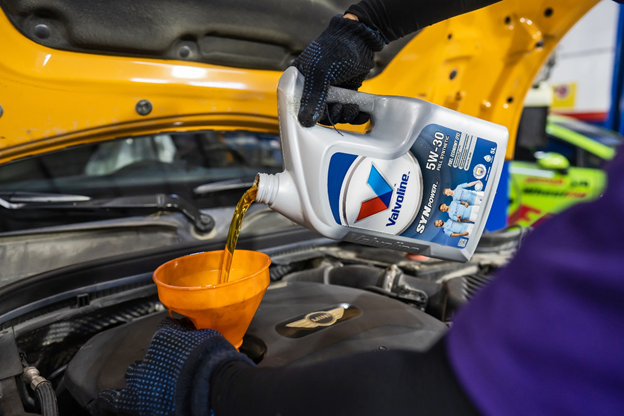
Switching from BMW-specified 5W-30 to a thicker 5W-40 or 10W-60 is sometimes suggested as a quick fix. It is not one we recommend. Thicker oil provides marginally greater film thickness on cylinder walls but can increase oil temperature, reduce flow to upper engine components on cold start, and is not approved to BMW LL-01 specification. A thicker oil masks the symptom without addressing the cause, and using non-LL-01 approved oil voids any remaining warranty consideration and can accelerate wear on the hydraulic valve lifters. Address the root cause — start with PCV diagnosis.
Can high oil consumption on an N55 damage the catalytic converter in Dubai?
Yes. Oil burning through the combustion chamber deposits ash on the catalytic converter substrate. Over time, this ash blocks the converter’s ceramic cells, reducing its efficiency and eventually triggering a P0420 or P0430 fault code (catalytic converter efficiency below threshold). On a Dubai-registered N55 with confirmed high oil consumption over 20,000+ km, we always check catalytic converter condition as part of the assessment. A cat replacement adds AED 2,500–4,500 to the repair cost if it has been damaged — another reason early intervention is worthwhile.
How do I know if my BMW N55 PCV valve has failed without going to a workshop?
There are two simple checks. First: with the engine running at idle, remove the oil filler cap briefly. If there is a strong vacuum (the cap is sucked down onto the opening) rather than slight positive pressure or neutral feel, the PCV diaphragm is likely stuck open creating excessive vacuum. Normal N55 crankcase pressure should be near neutral at idle. Second: inspect the rubber air intake boot between the airbox and turbo inlet for oily residue inside — oil mist from a failed PCV recirculates through this path. Either check taking less than 5 minutes can give you a strong indication before booking a workshop visit.
My BMW 335i has done 130,000 km in Dubai — is a piston ring replacement worth it?
This depends on the vehicle’s overall condition and the confirmed consumption rate. At 130,000 km with confirmed ring wear, a piston ring and liner resurfacing job at AED 12,000–22,000 effectively rebuilds the short engine block — a worthwhile investment if the rest of the car is in good condition with a known service history. However, we always work through the diagnostic ladder first: PCV at AED 400–800, then valve stem seals at AED 4,500–7,500, then rings at AED 12,000+ — to avoid committing to the most expensive repair when a less invasive one would resolve the consumption. The leakdown test tells us definitively what condition the rings are in before any decision is made.
Oil Management Tips for Dubai BMW 3 Series N55 Owners
- Check your oil level every 2,500 km without fail. The iDrive oil condition display is your first early-warning system. Establish your baseline consumption rate by checking at regular intervals. A sudden change in consumption rate — even if still within BMW’s guidance — is more diagnostically significant than an absolute level, and early detection prevents a damaging low-oil event on a summer motorway.
- Change oil every 10,000 km — not at CBS intervals. The CBS system on Dubai-registered N55 vehicles will frequently suggest intervals well beyond 10,000 km. In the UAE climate, fresh BMW-approved LL-01 5W-30 every 10,000 km is the most effective single maintenance step to reduce carbon ring fouling and PCV system contamination. An oil service costs AED 380–580 at Prestige German Auto.
- Investigate oil residue in the intake pipe immediately. Oily residue inside the intake boot or air filter box is a definitive PCV system warning. Do not wait for other symptoms to develop — the PCV repair costs AED 400–800 and can be done in under two hours at our Al Quoz BMW workshop.
- Avoid the temptation to keep topping up indefinitely. Some owners manage N55 oil consumption with regular top-ups rather than diagnosing the cause. This works until it does not — when a top-up is missed, or the consumption rate increases, and the low-oil warning appears on the SZR in July at 44°C. The bearing damage from even a brief period of insufficient oil lubrication in summer heat is disproportionately severe.
- Book a combined oil consumption and engine health check at 100,000 km. At 100,000 km on a Dubai-registered N55, a comprehensive assessment covering PCV condition, compression and leakdown testing, turbo boost and seal integrity, and oil analysis provides a complete picture of the engine’s condition and what — if anything — needs attention. The investment is modest; the peace of mind is considerable.
BMW N55 Oil Consumption Specialists — JLT and Al Quoz
Prestige German Auto has been diagnosing and resolving BMW N55 oil consumption issues in Dubai since 2008. Our Al Quoz Industrial Area 4 workshop is conveniently close to Jumeirah Lake Towers, JBR, Marina, and the entire JLT corridor — making us the first choice for BMW 3 Series and 5 Series owners across Dubai’s western residential communities.
We carry BMW LL-01 approved engine oil, OEM-specification PCV valves, and OEM-equivalent turbocharger units in stock for same-day or next-day resolution of the most common N55 oil consumption faults. Our 4.9-star Google rating, Fix Now Pay Later payment options, and 3-month/10,000 km warranty on all parts and labour reflect the standard of service we have maintained since 2008. Alongside engine repair, we also provide transmission service, suspension repair, brake service, and AC regas on all BMW models.
Topping up more than you should? Call us on +971 55 273 3911 or WhatsApp for a free assessment. Book your BMW diagnostic online or find us on Google Maps. Email: germanautouae@gmail.com.
🔧 BMW Burning Through Oil? Find the Cause — Starting From AED 400.
📞 Call: +971 55 273 3911
💬 WhatsApp — Free Assessment
📅 Book Online
📍 Al Quoz Industrial Area 4, Dubai | Same-Day Service | 3-Month / 10,000 km Warranty
Get a Free Estimate
Further reading: BMW Repair Dubai | Engine Repair Dubai | Oil Change Dubai | Transmission Repair Dubai | Suspension Repair Dubai | Brake Service Dubai | AC Repair Dubai | Mercedes Repair Dubai | Audi Repair Dubai | Porsche Repair Dubai | Range Rover Repair Dubai